
Frequently Asked Questions [FAQ] :
- 1 FLYASH BLOCK (AAC PROCESS) and FLYASH REINFORCED BLOCK (AAC PROCESS)
- 2 Why FLYASH BLOCK (AAC PROCESS) is Considered to be a Sustainable Building Material?
- 3 UAL's AC Sheet–the Best Roofing Solution
- 4 Advantages of Fibre Cement Roofing Sheets
- 5 Whatare the Features of FLYASH BLOCK (AAC PROCESS) and FLYASH REINFORCED BLOCK (AAC PROCESS)?
- 6 Koncrete FLYASH BLOCK (AAC PROCESS)–The First Edition in Smart Construction
- 7 What Makes FLYASH BLOCK (AAC PROCESS) a Better Choice Over Red Bricks
- 8 3 Ways to use Corrugated Fibre Cement Sheets in the Building Construction
- 9 Understanding Fibre Cement
FLYASH BLOCK (AAC PROCESS) and FLYASH REINFORCED BLOCK (AAC PROCESS)
Invented in 1920 by a Swedish scientist, Mr. John Axel Ericson, Autoclaved Aerated Concrete or FLYASH BLOCK (AAC PROCESS), is a steam-cured cementitous product manufactured from a mix of pulverized fly ash, cement, lime, gypsum and an aeration agent, giving it its unique cellular lightweight internal structure. Its attributes like its light weight nature, excellent thermal insulation, acoustic properties and energy efficiency make AAC an intelligent building solutions system.
1. What are FLYASH BLOCK (AAC PROCESS) ?
Invented in 1920 by a Swedish scientist, Mr. John Axel Ericson, Autoclaved Aerated Concrete or FLYASH BLOCK (AAC PROCESS), is a steam-cured cementitous product manufactured from a mix of pulverized fly ash, cement, lime, gypsum and an aeration agent.
2. What are the benefits of using FLYASH BLOCK (AAC PROCESS)?
FLYASH BLOCK (AAC PROCESS) come with a wide array of benefits like :–
Light weight
Excellent thermal insulation
Acoustic properties
Energy efficiency
3. Which countries have adopted the usage of FLYASH BLOCK (AAC PROCESS)?
FLYASH BLOCK (AAC PROCESS) have been widely used in India as early as 1970. It also has wide usage in Europe, Middle East, South East Asia and China.
4. What are the factors which have contributed to the superiority of FLYASH BLOCK (AAC PROCESS) over other building materials?
As a revolutionary precast building material, FLYASH BLOCK (AAC PROCESS) offer a unique combination of high durability and strength, low weight, unprecedented buildability and superior ecological green features. The product is the preferred choice for all building applications and is used for all kinds of walls, be it external or internal, non-load bearing walls etc. and is fast replacing ordinary red clay and fly ash bricks.
5. Where is UAL’s manufacturing unit located ?
UAL’s FLYASH BLOCK (AAC PROCESS) manufacturing unit is located in Bagnan, West Bengal.
6. Has UAL partnered with any particular body for their manufacturing unit?
UAL’s state of the art manufacturing unit in Bagnan has been set up with technical collaboration with HESS AAC Systems, Netherland, the pioneers in the world for AAC machinery.
Why FLYASH BLOCK (AAC PROCESS) is Considered to be a Sustainable Building Material?
With the arrival of AAC (Autoclaved Aerated Concrete) blocks and their extensive use for building construction, red bricks have somehow taken a backseat. The lightweight, load-bearing, highly insulating FLYASH BLOCK (AAC PROCESS) are extremely durable and come in a wide range of sizes and strengths, which makes the construction process a breeze.
What are FLYASH BLOCK (AAC PROCESS)?
Invented by a Swedish scientist, Mr. John Axel Ericson, Autoclaved Aerated Concrete or FLYASH BLOCK (AAC PROCESS) are one of the sturdy building materials that are usually steam-cured cementitous product manufactured from a mix of pulverized fly ash, lime, cement, gypsum and an aeration agent. The composition makes them quite lightweight yet excellent on thermal insulation. Its energy efficiency and acoustic properties are quite unlike in the red bricks.
Why FLYASH BLOCK (AAC PROCESS) are Sustainable Building Textile?
FLYASH BLOCK (AAC PROCESS) designed by the UAL Industries under the brand name KONARK are considered highly sustainable as a building material. Here’s why.
Structural capability: The compressive strength of AAC is very good. Although it is one-fifth of the density of the normal concrete, FLYASH BLOCK (AAC PROCESS) come with double bearing strength and load-bearing capability. Again it is way lighter than the traditional bricks, therefore, easier and cheaper to transport. Usage of FLYASH BLOCK (AAC PROCESS) significantly reduces overall dead load of a building, thereby allowing construction of taller buildings at an ease. Being extremely lightweight, it also reduces the mass of a structure, which decreases the impact of an earthquake on a building.
Fire and pest resistance: Another important aspect that makes autoclaved aerated concrete blocks a sustainable material is its exceptional resistance to fire and vermin. It’s inorganic, incombustible and does not actually explode in any conditions. No doubt, these are quite apt for the fire-rated applications. Even FLYASH BLOCK (AAC PROCESS) also come with fire ratings depending on the thickness of the blocks or FLYASH REINFORCED BLOCK (AAC PROCESS), which can withstand fire up to 6 hours of direct exposure. Due to its structural composition FLYASH BLOCK (AAC PROCESS) are not damaged by termites and other pests. Simultaneously, it does not attract rodents or other pests.
Environmental impacts: FLYASH BLOCK (AAC PROCESS) have lower embodied energy per square metre which is not available in other concrete alternatives. As a result, impact of greenhouse gas emission is considerably less on the FLYASH BLOCK (AAC PROCESS). At the same time, AAC has much higher insulation value, which results in the reduced heating and cooling energy consumption. AAC has some significant environmental advantages over conventional construction materials, which ensures their longevity and insulation capacity. What’s more important is that total energy consumption for producing ACC is much lesser than what it takes to produce other building material. And, it, reduces 30% of environmental waste when it is used. Considering its environmental impacts, autoclaved aerated concrete is a better choice for the building as well as environment.
Non-toxicity and breathability: Being aerated, the nature of the FLYASH BLOCK (AAC PROCESS) facilitates breathability and there is no toxic substance present in the final product. As a result, FLYASH BLOCK (AAC PROCESS) are ideal material for homes for the chemically sensitive
The Prime Takeaway
With AAC blocks in place, building a beautiful house is never a big deal. In fact, using FLYASH BLOCK (AAC PROCESS) can keep your house well protected from weather conditions while providing sustainability from all aspects.
UAL’s AC Sheet – the Best Roofing Solution
Planning for a full-fledged renovation of your house? Worried about the roofing material that can withstand extreme weather conditions? Worry no more! With UAL’s asbestos cementing sheets you can get everything covered. The cement roofing sheets of UAL makes your property looks beautiful, while ensuring paramount safety to your property. Top-notch corrugated fibre cement sheet from UAL Industrsie under the brand name of KONARK is corrosion & erosion free and hence you get a damage-free solution for your roofing requirements
What are AC Sheets?
C sheets are basically asbestos cementing sheets which are weatherproof and corrosion resistant, which demands no maintenance yet run for years. Unlike metal sheets, AC sheets corrode and deteriorate with time and exposure to various weather conditions. No wonder, why AC Sheets are so preferred as a roofing material these days.
Here’s why UAL’s AC sheets are the best roofing solution!
AC Sheets Are Lightweight
Fibre cement cladding is lightweight, which makes it an ideal choice as a roofing material. Being lightweight, it helps in quicker, easier and more cost-effective transport to the site. Also, they offer fast and hassle-free installation with minimal load imposed on the structure. It eliminates the risk of accidents as well. As a result, fibre sheets are the strong and durable roofing material for warehouses, factories, housing, and practically any structure where roofing is required.
Ac Sheets Are Impact Resistant & Durable
The high rugged surface of the fibre cement sheet makes it a highly durable, impact- and abrasion-resistant material that lasts for decades. With high impact features, the fibre cement cladding is certainly an ideal choice for heavy-use public environments, like schools, hospitals and so on.
AC Sheets Ensures Quick and Tidy Installation
The composition of fibre cement cladding makes roofing installation quick and easy, and at the same time, it can be tailored accordingly to fit with the specification. Moreover, they come with less mess, fuss and environmental wastage during the installation process. These are made in accordance with the standards of Bureau of Indian Standards- IS 459/1992 for Corrugated Roofing Sheets, IS2098/ 1997 for Flat Sheets and IS 1626 (Part 111)/1994 for Roofing Accessories.
Fibre Cement is Water- and fire-resistant
Being resistant to fire and water, UAL’s AC sheets provide additional protective value against fire and water. Apart from protecting the property from weather conditions, it also saves it from fire and similar other natural disaster.
Fibre Cement is Non-toxic
UAL’s AC sheets, often called fibre cement are asbestos free and are 100% non-toxic, which results in the zero production of hazardous smoke to post any serious health threat.
It needs Minimal maintenance
Finally, the important of all is that Fibre sheets need minimal maintenance as they come with exceptional durability. Neither weather extremities not the calamities like fire can pose a threat to fibre cement roofing. Thus, it saves quite a lot of time and expense on the structure’s maintenance over its lifespan.
Today, UAL’s AC sheets have worldwide presence in countries like India, Russia, China, Indonesia, Thailand and Brazil. This practically ageless and maintenance free roofing sheet certainly makes construction process a real breeze.
Advantages of Fibre Cement Roofing Sheets
Fibre cement roofing sheets are becoming quite popular in rural areas in the recent times. It is the rural sector who has been widely benefited for this. Weather-resistant, sturdy and highly durable corrugated sheets not only make an awesome roofing solution, but also offer top-notch security from any unforeseen weather changes. Being corrugated, they offer strong and durable roofing that runs for years without any glitches. Needless to say, the cost-effective factor and the product quality has drawn a number of potential buyers.
Here’s a look into the advantages of fibre cement corrugated sheets as a roofing solution over other roofing materials.
They are Fire-resistant
The natural fire-resistant property of fibre cement sheets make it perfectly ideal for roofing solution. Our KONARK roofing sheets conform to the stringent fire safety guidelines and hence offer highest level of security against fire. It is a non-combustible building material and conforms to Class ‘0’ rating for the surface spread of flame.
Weather -resistant
Corrugated roofing sheets are a natural insulator. As a result, these sheets have thermal efficiency ten times higher than that of the other roofing materials like metal sheets. Being natural insulators, they remain warm in winter and cool in summer. Due to their inherent thermal insulation properties, the roofing sheets are ideal in any weather conditions. Also, it cuts out carbon dioxide emissions, thus combating climate change as well.
They Last for Years
Fibre cement roofing sheets are quite sturdy and unlike the other building products, these roofing sheets last for years. Fibre cement corrugated sheets could last for at least fifty to sixty years. Compared to metal and any other product, this is undoubtedly a preferred choice in terms of longevity.
They Are Cost-Efficient
Unlike the building materials available in the market, fibre roofing sheets are cost-effective in every possible manner. Corrugated fibre sheets are very good additive with cement which also gives highest strength to the roofing material. Compared to the any other roofing material, this is cheaper yet with the same durability.
Fibre cement roofing sheet is quite a robust roofing solution. They won’t rot or decay due to weather conditions, thus, making an ideal solution to use in the exposed areas. Once installed, they will also last for years.
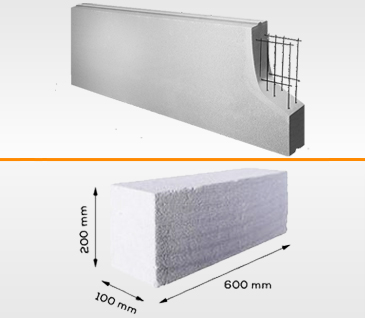
What are the Features of FLYASH BLOCK (AAC PROCESS) and FLYASH REINFORCED BLOCK (AAC PROCESS)?
AAC or Autoclaved Aerated Concrete Blocks is considered as an excellent form of building material due to its durability. It is known for its excellent heat, sound and fire resistant characteristics. This kind of block is lightweight and offers ultimate flexibility, durability and workability. The main ingredients included in the FLYASH BLOCK (AAC PROCESS) include water, cement, calcined gypsum, quartz sand and quicklime. This kind of building material is appropriate for producing CMU or concrete masonry unit like blocks. The types of AAC products include blocks, roof & floor FLYASH REINFORCED BLOCK (AAC PROCESS), lintels, cladding FLYASH REINFORCED BLOCK (AAC PROCESS) and wall FLYASH REINFORCED BLOCK (AAC PROCESS).
What is Autoclaved Aerated Concrete Blocks?
Autoclaved Aerated Concrete or AAC is a load-bearing, high-insulating yet lightweight building component produced in a wide array of strengths and sizes. In comparison to the red bricks, the FLYASH BLOCK (AAC PROCESS) are much lighter.
Developed in 1924, the AAC material has its origin in Sweden and is presently one of the most popularly used building materials all across the world. As already mentioned, the Autoclaved Aerated Concrete material is created from the common materials like cement, water and sand and after the mixing and moulding process, the same is then autoclaved under normal heat and pressure, thus producing its unique properties. Due to its excellent acoustic absorption and thermal insulation properties, the AAC material is on demand all over.
About the Features
Other than the above-mentioned features (acoustic absorption and thermal insulation), the Autoclaved Aerated Concrete is both pest and fire resistant. Most importantly, it is environmentally and economically superior to the traditional structural building materials like wood, stone, brick and concrete.
FLYASH BLOCK (AAC PROCESS) is considered to be an excellent and unique form of building material because of its sound, fire and heat resistant features. As the FLYASH BLOCK (AAC PROCESS) reduce overheads at the construction site and at the same time add to the quality of the building, it is always preferred over the red bricks.
Because of its excellent properties and features, AAC is widely used in different building constructions, which includes residential homes, industrial and commercial buildings, hospitals, hotels, schools and other applications. Autoclaved aerated concrete is a cement-based material that resists rot, water, mildew, mold and insects. Each of the units is precisely shaped and complies with tight tolerance.
Its lightweight feature adds to sound reduction, thereby, maintaining privacy.
Now, if you are looking for quality autoclaved aerated concrete blocks, make sure you get in touch with one of the best FLYASH BLOCK (AAC PROCESS) manufacturers positively. If you are in Kolkata and looking for one of the leading manufacturers here itself then UAL Industries Ltd will be the best choice.

Koncrete FLYASH BLOCK (AAC PROCESS) – The First Edition in Smart Construction
Over the past few years, there’s been a massive increase in the use of FLYASH BLOCK (AAC PROCESS) instead of red bricks for building construction. The primary reason is that Autoclaved Aerated Concrete (AAC) blocks come with high resistance to weather conditions, improved flexibility and optimum durability. Invented in 1920 by a Swedish scientist, Mr. John Axel Ericson, FLYASH BLOCK (AAC PROCESS) are basically steam-cured cementitous product manufactured from a blending pulverized fly ash, lime, cement, gypsum and an aeration agent in equal proportion.
This unique mix gives these blocks its cellular lightweight internal structure. Unlike red bricks, FLYASH BLOCK (AAC PROCESS) are featured with excellent thermal insulation; acoustic properties and energy efficiency.
FLYASH BLOCK (AAC PROCESS) have been in India post 1970, but the product has fetched its maximum limelight under the brand name Koncrete, manufactured by UAL Industries Ltd. Here’s a look at the reasons why Koncrete AAC is considered as the first edition building material for smart construction.
Structural Capability
Designed with new age technology, the compressive strength of FLYASH BLOCK (AAC PROCESS) is quite high. Despite being thinner and lightweight compared to the normal concrete, their strength bearing capability is way higher than the normal ones. In fact, for any load bearing walls, Koncrete FLYASH BLOCK (AAC PROCESS) are the perfect addition.
Durability
With Koncrete blocks, the foundation of the building is lightly loaded while at the same time it offers strong support to the building structure. In fact, its load bearing capacity is so high that it can seamlessly bear the weight of several floors at a time
Koncrete is made of calcium silicate that covers a plethora of air ports, thus, making it solid and strong enough to bear the weight.
Thermal Insulation
The cellular structure of Koncrete FLYASH BLOCK (AAC PROCESS) gives it ten times higher thermal efficiency compared to the normal concrete as well as the bricks. Also, UAL’s Koncrete FLYASH BLOCK (AAC PROCESS) is a natural insulator, which helps in keeping your interiors warm in the winters & cool in the summer. The natural insulating properties of Koncrete helps you reduce the energy bills otherwise required for heating & cooling appliances. Alongside, the use of FLYASH BLOCK (AAC PROCESS) also cuts down carbon dioxide emissions and combats climate change.
Sound Insulation
Unlike red bricks and other conventional building materials, UAL’s Koncrete is known for providing excellent sound absorption with an STC (Sound Transmission Class) rating of 44. The tiny air cell structure in UAL’s FLYASH BLOCK (AAC PROCESS) offers superb sound insulation. According to the manufacturers, it can easily withstand the standard 40-50 dB across the walls. Since Koncrete FLYASH BLOCK (AAC PROCESS) come with amazing acoustic properties; they become a highly effective sound barrier for conference halls, IT offices, schools, hospitals, hotels and theatres.
Fire Resistant
No matter, whether you are staying in the urban area or in the rural, incidents of fire are pretty common. With FLYASH BLOCK (AAC PROCESS), you don’t have to worry about this. UAL’s Koncrete FLYASH BLOCK (AAC PROCESS) comes with fire-resistant properties. Each of the Koncrete blocks is designed keeping in line with the stringent fire safety requirements. Koncrete is categorized under grade Euro Class-I for non-combustibility which makes it a highly reliable component for building construction.
Eco-friendly
Unlike a host of building materials, UAL’s FLYASH BLOCK (AAC PROCESS) are eco-friendly & energy-efficient. The production of Koncrete does not release any harmful substance. In fact the demolished Koncrete blocks can be further used in the construction process.
Last but not the least, Koncrete FLYASH BLOCK (AAC PROCESS) provide optimum protection from weather conditions and natural disasters. Koncrete has excellent resistance to earthquakes & hurricanes. It has been proven to endure wind load of Category 5 tropical storms. At the same time, Koncrete blocks are water & pest resistant, which makes it truly ideal from every possible manner. Unlike red bricks, Koncrete blocks come with a host of convenient features that are conducive for building construction.
What Makes FLYASH BLOCK (AAC PROCESS) a Better Choice Over Red Bricks
While red bricks are one of the oldest building materials, FLYASH BLOCK (AAC PROCESS) are outgrowing their popularity especially in the rural and urban areas. The reason is people are focused on getting something highly sustainable that offers long term benefits. The lightweight AAC or autoclaved aerated blocks are extremely durable, and hence make a great building material.
Considering so many benefits, it’s quite obvious that people are more interested in investing in the blocks instead of red bricks. According to UAL Industries, a leading FLYASH BLOCK (AAC PROCESS) manufacturer, red bricks cannot match with the durability of the FLYASH BLOCK (AAC PROCESS) and hence the latter is often a preferred choice. Here’s how the FLYASH BLOCK (AAC PROCESS) are way better alternative than red bricks
Consistency
Bricks are made of a mixture of clay (alumina), lime, sand, iron oxide, and magnesia. The texture of the red bricks depends mostly on the quality of the local soil, since the sole element of the brick is clay. On the other hand, FLYASH BLOCK (AAC PROCESS) are manufactured with a mix of fly ash, cement, lime, gypsum, and various other aeration agents. The fly ash used in the FLYASH BLOCK (AAC PROCESS) is eco-friendly and free of any toxic materials. Moreover, they are stronger than the bricks, which make them a better choice.
Durability
Bricks are considered strong and durable, however with the arrival of the FLYASH BLOCK (AAC PROCESS) the notion is somewhat changed. In fact, FLYASH BLOCK (AAC PROCESS) like Koncrete offer excellent resistance to earthquake and hurricanes. The micro-cellular structure of the Koncrete offers an effective barrier against moisture penetration, thus resisting passage of water from the surface.
Speed of Construction
FLYASH BLOCK (AAC PROCESS) come with thin layer mortar that sets in within a few hours. In spite of having larger blocks than the red bricks, FLYASH BLOCK (AAC PROCESS) come with high dimensional accuracy. They can be effectively installed using glue instead of mortar for faster construction. Being lightweight, they also ensure quick installation at the site.
Energy Efficiency
One of the best benefits of the FLYASH BLOCK (AAC PROCESS) Koncrete is that they do not emit any toxic gas or substances during the production process. Thus, it’s an eco-friendly solution. Moreover, they are often recycled in the construction process, which is otherwise impossible in case of red bricks.
Considering the cost-efficiency and sustainability it offers, FLYASH BLOCK (AAC PROCESS) stands way better than the traditional red bricks in many different ways. No wonder, why blocks are so widely preferred in the rural and the urban areas.

3 Ways to use Corrugated Fibre Cement Sheets in the Building Construction
Fiber cement sheets are the most cost-effective, easy-to-install, strong and durable roofing material specially used in warehouses, factories, low-cost housing and any structure needing a roof. Being impact resistant and weatherproof, these fibre cement sheets don’t crack, swell or warp like wood. They are very low maintenance and thermal efficient that cool down rapidly at night. In warm days, this helps the residents to sleep peacefully at night.
Fibre cement corrugated sheets are used in various sectors of construction like industrial, agricultural and even domestic and residential buildings for its varied characteristics and features. Here are a few types of building constructions where corrugated fibre cement sheets are used:
Industrial buildings:
Konark Corrugated Fiber Cement Sheet is ideal roofing material for its durability, energy efficiency and cost saving abilities. It can be used in industrial warehouses; agricultural warehouses etc where a lot of people work together and many financial aspects are involved. It provides excellent resistance to earthquake and tropical storms along with water-resistant or pest resistant features. In warehouses, it is expected there will be a lot of noise. The sheets can provide excellent sound absorption too which is a boon for the surrounding schools, hospitals, offices etc.
Cooling towers:
Cooling towers are mainly situated on top of high rise buildings and they are the most efficient way to reject heat from the cooling system because the water evaporates to carry the heat away. Corrugated fibre cement sheets are used as infill or insulating fill between cooling tower panel surfaces. Its inherent thermal insulation properties reduce the need for heating and cooling, thereby cutting carbon dioxide emissions and combating with climate change.
Residential use:
The primary concern for homeowners is safety. The corrugated fibre cement sheets of Konark are extremely strong and durable despite being lightweight and they provide the highest security against fire and meet the most stringent fire safety requirements. The high thermal resistance feature helps to maintain temperature, reducing the usage of heating and cooling equipment. Other than that, the sheets are cheap and need almost no maintenance.
Understanding Fibre Cement
Myths and Facts of Chrysotile AC Product
MYTHS : Asbestos cement is dangerous material.
FACTS: Chrysotile cement is completely safe. It is not corrosive, reactive, ignitable or toxic.
MYTHS: Inhalation of even one fibre of asbestos is harmful.
FACTS: Thousands of asbestos fibres, invisible, are inhaled by us every day from natural resources, and cleared off by natural clearance mechanisms without harm Asbestos cement has only 7-9% asbestos fibre that is bound with cement and cannot be released into air. Even if any fibre is released, its chemical characteristics change because of bonding with cement and it cannot be called asbestos fibre.
MYTHS: Asbestos cement water pipes cause colonic carcinoma and other diseases.
FACTS: Asbestos fibres in water are ingested without any harm whatsoever. Therefore, the AC water pipes pose no threat. Even the World Health Organization permits use of Chrysotile asbestos cement pipes
MYTHS: Developed countries have banned asbestos cement products. Only poor countries need it
FACTS: No prohibition of asbestos products in over 77% of world nations.
MYTHS: Asbestos cement production is banned in the USA
FACTS: The US Court of Appeals rejected a proposed ban on scientific grounds. Asbestos-cement products are not banned in the USA.
What is Chrysotile Fibre
Chrysotile fibre is a naturally occurring mineral found in underground rock formations. It is also known as white asbestos. For commercial purposes, it is recovered by mining and rock crushing. “Asbestos” was a commercial term given to collective group of 6 naturally occurring minerals whose crystals occur in fibrous forms. Though commonly referred as “Asbestos” these 6 silicate minerals come from two distinct groups and are chemically and mineralogically different. There are two distinct varieties of asbestos (i) Serpentines (Chrysotile white asbestos) and (ii) Amphibole variety comprises of Amosite, (brown asbestos), Crocidolite (blue asbestos), Tremolite, Actinolite, and Anthophyllite, Mining, production and usage of Amphibole variety of asbestos have been prohibited all over the world for decades ago as they were considered un-safe.
Only Chrysotile variety of fibre (white asbestos), which is considered safe to use under controlled conditions, is in commercial use now. Indian asbestos cement sheet and pipe manufacturers also use only Chrysotile variety which incidentally is all imported mostly from Russia, Kazakhstan and Brazil.
Chrysotile asbestos fibre is also mined in India in minuscule quantities and so is not of any consequence.
Chrysotile asbestos fibre, (composed mainly of magnesium and silica), is a great reinforcing agent. While its tensile strength is greater than steel, it has other rare and highly valued fire-retardant, chemical-resistant and heat-insulating qualities. In fact, it is a magic mineral.
Fine fibres, invisible to the eye, are present in the air and water in almost every region of the globe. Hence, all of us may be inhaling and also ingesting them through drinking water every day.
Fibre Cement products
-
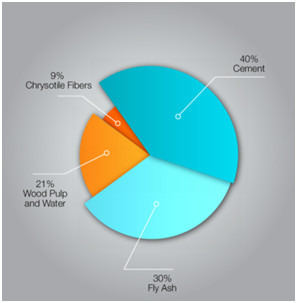
These products, also commonly known as AC (asbestos-cement) products, are made with a mix of Chrysotile fibres (7-9%), cement (about 40%), Fly Ash (about 30%) and the rest being wood pulp and water. Over 95% of Chrysotile asbestos fibre imports of India go in to Chrysotile Fibre Cement sheet and pipe production.
AC Sheets have been used in India for over 80 years. Being weather-proof, fire resistant, non-combustible, and corrosion resistant, these sheets are durable practically ageless and maintenance free, whereas metal sheets corrode and deteriorate with age and exposure. (See Annexure ‘A’ for comparison).
AC Sheets have also proven to be the most cost effective, easy-to-install, strong and durable roofing material for warehouses, factories, low-cost housing, and practically any structure needing a roof. Apart from India, other developing countries – China, Russia, Brazil, Indonesia, Thailand, and Vietnam are also the large users of AC Sheets.
-
AC sheets and pipes, being corrosion and erosion-free, once properly laid and jointed, need no maintenance or replacement. They are also very cost effective.
AC products, which consume low energy in manufacture and do not in any way deplete the natural resources, meet the needs of the country in its developing economy in the context of rapidly rising population and limited resources.
AC products are manufactured under licence strictly conforming to the specifications of Bureau of Indian Standards. IS 459/1992 for Corrugated Roofing Sheets, IS 2098/1997 for Building Boards, IS 2096/ 1992 for Flat Sheets and IS 1626 (Part III)/ 1994 for Roofing Accessories. AC Pressure Pipes are covered by IS 1592/1989.
Comparison of asbestos cement sheet with galvanized aluminium sheet and colour coated metal sheet
| Sl.No. | Characteristics | Asbestos Cement Sheets | Galvanized Aluminium Sheets | Colour Coated Metal Sheets |
1 |
Life Span (Years) |
50 yrs. (Min) Non-Corrosive |
10-15 yrs. |
Data not available. |
2 |
Maintenance |
NIL |
NIL |
|
3 |
Fire Rating |
Fire Retardant and Non-Combustible |
Tendency to twist and melt |
Tendency to twist and melt |
4 |
Thermal Insulation |
Good |
Poor |
Poor |
5 |
Acoustic Rating |
Good |
Poor |
Poor |
6 |
Absorption of Rain and Wind Noise |
Good (deadens these noises) |
Poor |
Poor |
7 |
Energy Required in Production |
16 |
69 |
124 |
8 |
Man Power |
Intensive |
Low |
Low |
9 |
Wind Resistance |
Good |
Poor |
Poor |
10 |
Weather Effect |
None |
Corrosion at drilled holes and where galvanizing is cracked |
Surface oxidation |
11 |
Bimetallic Reaction |
None |
None |
Present in contact with |
12 |
Condensation |
Low and will not affect sheet |
High and will affect sheet |
High and will result in corrosion |
13 |
Effect of High Winds |
Minimum |
Unacceptable rattling sound |
Rattling sound |
14 |
Noise Level |
Low |
High |
High |
15 |
Protective Coating |
Not required |
Not required |
Required to avoid direct |
16 |
Storage |
Can be stored in open space at work site |
Needs closed go-down for storage to avoid weather assaults |
Needs closed go-down for storage to avoid weather assaults |
17 |
Coverage Efficiency |
Approx. 50% higher than GC and Aluminium Sheets. |
Effective laid area becomes only 67% as compared to AC Sheets |
Effective laid area becomes only 67% as compared to AC Sheets. |
18 |
Cost |
Low |
High |
Highest |
What is the situation in India?

-
In India, only the Chrysotile variety of asbestos fibre, which is considered safe, is used in asbestos-cement products, namely, sheets and pipes. The fibres are mixed and bonded with cement and other raw material, with no chance of escaping into the atmosphere on normal usage.
Workers in Chrysotile Fibre Cement product industry in India have not had any adverse health effects in spite of decades of service, there being no risk of exposure to asbestos dust because of pollution control measures installed in the factories. Health of the workers is closely monitored as per directives and regulations of the government agencies.
-
There is no risk whatsoever in living or working under the AC roof, as chrysotile asbestos fibres are bonded (locked in) with cement and cannot get released in to the atmosphere. Dr F.D. Pooley’s Report of 2004 concludes “asbestos fibres locked in to high density products like asbestos-cement have been rendered safe by the attendant chemical process …. Chrysotile fibres have been so altered chemically and structurally that it is no longer justifiable that they should continue to be defined as chrysotile”.
Transportation of drinking water in Asbestos Fibre Cement pipes is absolutely safe as confirmed by the World Health Organization. Ingested asbestos does not pose any health risk. Indian climatic conditions never required the type of asbestos spraying and insulation, at one time common in the West. Thus, the health hazards and risks associated with the past asbestos fibre usage in the western countries, have nothing to do with the current usage of asbestos products or applications in India. In India, asbestos cement sheets have been extensively used for over 80 years providing safe, economical, and durable form of roofing to millions of household and other structures across the country. It is noteworthy that AC Sheets have withstood the test of time with no reported risk/ casualty to those living under its roof and with no adverse effect on the local environment.
India uses only about 20% of the Chrysotile asbestos produced in the world. The rest is used in several other countries, where too, these Chrysotile Fibre Cement products are accepted as ideal and safe. The Russian Government Decree No. 869 of July 1998 stated “Excessively hasty and not well-founded refusal to use Chrysotile asbestos does not have a sufficient medical and biological substantiation and can bring about serious negative consequences for economy of a great number of countries. The ban in some countries did not consider national social and economic interests, scientific research results nor the latest scientific and technical achievements regarding production and use of Chrysotile asbestos”.